
If you’ve ever listened to a space journalist talk about rockets, you already know the energy: wide eyes, unstoppable curiosity, and that unmistakable belief that the future is happening right now.
And honestly? That’s exactly how I feel when I look at what’s happening in the garage door industry today.
Because while most homeowners still think of garage doors as “just a big door that opens and closes,” the truth is this:
Garage doors are evolving—fast.
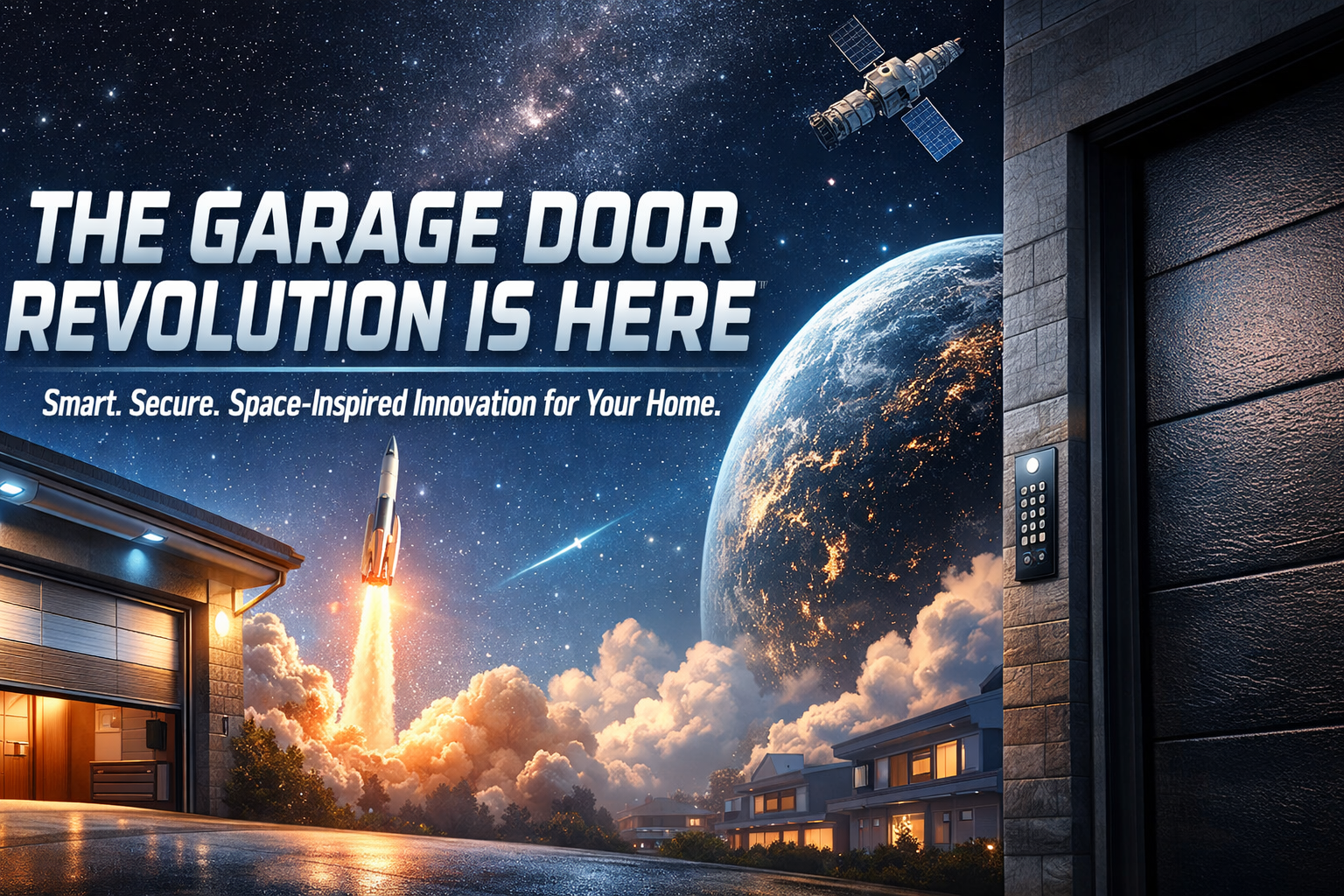
And the changes happening now feel like the same kind of revolution we’ve watched in space travel.
From the rise of reusable rockets to AI-driven mission systems, innovation has made space more accessible than ever. In the same way, garage doors have become smarter, safer, stronger, and more energy-efficient than they’ve ever been before.
Let’s take a closer look at the garage door revolution—through the lens of someone who lives for space exploration.
1. Innovation Isn’t Just for Space Anymore
In the space world, innovation is the difference between failure and success. One tiny malfunction can end a mission.
Now think about your garage door.
It’s the largest moving object in most homes, and it opens and closes thousands of times a year. It faces heavy daily use, weather pressure, temperature shifts, and constant mechanical stress.
So when garage door technology improves—even in small ways—it adds up to huge benefits for homeowners:
-
More safety
-
Better security
-
Smoother operation
-
Longer lifespan
-
Less maintenance
Just like spacecraft upgrades improve the reliability of missions, garage door upgrades improve the reliability of your home. If you need this improvement, consult the garage door repair Ellicott City MD specialist. We all know that garage door DIY’s can be very dangerous.
2. Smart Garage Doors = Mission Control in Your Pocket
Space travel today is all about control, monitoring, and instant communication.
That’s why one of the most exciting “space-age” upgrades in the garage door world is smart garage door systems.
Modern smart openers let you:
✅ Open and close your garage door from anywhere
✅ Get real-time alerts when the door moves
✅ Check if your garage is open while you’re away
✅ Share access safely with family members or delivery drivers
✅ Integrate with smart home systems like Google Assistant or Alexa
That’s not just convenience—it’s control.
The same way mission control tracks every piece of data in a spacecraft, you can now track your garage door with the same mindset:
real-time updates, remote access, and total awareness.
3. Stronger Materials, Smarter Engineering
In space travel, materials matter. Rockets, capsules, and satellites must survive extreme conditions—heat, pressure, vibration, impact, and more.
While your garage door isn’t flying through Earth’s atmosphere (hopefully), it still deals with major demands:
-
High wind
-
Heavy daily use
-
Storm impacts
-
Sun exposure
-
Moisture and corrosion
-
Temperature changes
That’s why today’s garage doors are being engineered using better designs and stronger materials like:
-
Reinforced steel doors
-
Durable insulated panels
-
Rust-resistant hardware
-
High-cycle springs for longer life
-
Wind-load rated doors for storm-prone areas
This kind of engineering isn’t just “nice to have.”
It’s what separates a door that lasts 5 years from one that lasts 15–25 years with proper care.
4. Energy Efficiency: A Cleaner Future Starts at Home
Now here’s the surprising connection:
Your garage door can impact your home’s energy efficiency more than you think.
Especially if:
-
Your garage is attached to your home
-
You have a room above the garage
-
You store temperature-sensitive items inside
-
You spend time in the garage as a workspace
An insulated garage door helps reduce:
-
Heat transfer in summer
-
Cold drafts in winter
-
Humidity fluctuations
-
AC and heating overuse
A well-sealed, insulated door doesn’t just feel better—it can help lower your energy costs and support a more efficient lifestyle.
That’s the kind of everyday upgrade that adds up long-term—just like investing in cleaner energy technologies worldwide.
5. Safety Systems Are Getting Better—and That Matters
Space travel is built on safety. Redundant systems exist for one reason:
to protect life and prevent disaster.
Garage doors are no different. A faulty garage door can become a serious hazard. Springs can snap, cables can fray, tracks can bend, and sensors can fail.
Modern garage door systems now include better safety features such as:
-
Auto-reverse sensors
-
Motion detection lighting
-
Stronger locking systems
-
Safer spring and cable designs
-
Smart monitoring for unusual behavior
These upgrades protect:
👨👩👧 Your family
🚗 Your vehicle
🏠 Your property
🔒 Your security
And they prevent small issues from turning into big emergencies.
6. The Future of Garage Doors Is Already Here
As someone who follows space travel, I’ve learned one big truth:
The future doesn’t arrive all at once—it shows up in upgrades.
And in garage doors, those upgrades are happening right now:
🚀 Quiet, ultra-smooth openers
🚀 Stronger, wind-rated doors
🚀 Smart control from your phone
🚀 Better insulation and sealing
🚀 Modern design that boosts curb appeal
🚀 Built-in security features
Your garage door is no longer just a “door.”
It’s becoming part of your home’s ecosystem—working with your smart devices, improving your comfort, protecting your belongings, and upgrading your lifestyle.
Your Home Deserves Space-Level Technology
We often associate innovation with rockets, astronauts, and massive engineering breakthroughs.
But the truth is… innovation is everywhere.
Even in the garage door.
So the next time someone says garage doors are boring, I’ll say what any space travel enthusiast would:
Not anymore.
Because today’s garage door isn’t just a part of your home—it’s a symbol of progress:
smarter design, safer living, better energy use, and future-ready comfort.
And that’s a revolution worth getting excited about.